Cornucopia College
A farm-to-table microcollege for a healthier food industry
A micro-college integrating agriculture, culinary arts, sustainability, and food policy. Students experience the entire farm-to-table process while specializing in climate change, business, culinary arts, or policy. Inspired by Deep Springs College and Wageningen University.
View full project (pdf) ↗︎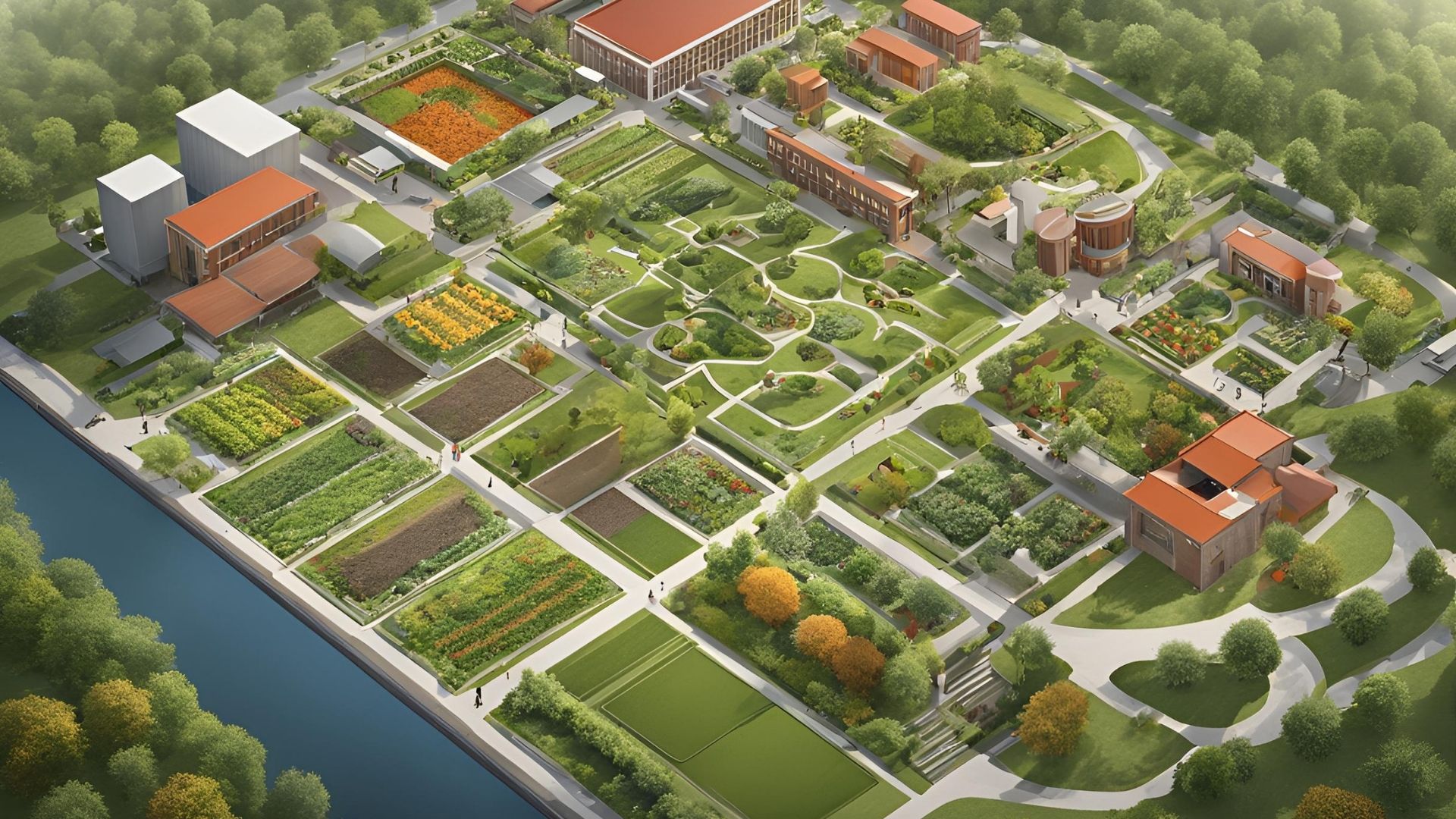
Overview
Focus Area
Place-Based Education
Skills
Curriculum Design
Design Thinking
Problem: Industrialized education and agriculture
Our food industry is just that—an industry. Industrialized agriculture and food processing have been linked to health epidemics and climate crises, and there is now bipartisan support to restructure our food industry. Meanwhile, many students attend urban universities that are completely disconnected from agriculture and the food industry.
What would it look like if a university was built to transform the food industry, building a better relationship between humans, food, and the land itself?
Our team’s solution: A Farm-to-Table Microcollege
Our school would transform every step of the farm-to-table process, while giving students hands-on, applied learning experiences. The campus itself would be a fully functional farm, complete with a logistics network consisting of direct partnerships with grocers and restaurants. The micro-college model comes from David Staley’s book, Alternative Universities, featuring small cohorts of 30 students and a dynamic team of faculty and staff, each of whom play a very dynamic role in running the farm and the school.
We took inspiration from David Staley’s idea of a micro-college and combined it with two existing, innovative models: the micro-college called Deep Springs College and the world-renowned sustainability leader Wageningen University.
Farm-to-table Curriculum.
- Farming, yield, and sustainability
- Processing, preservation, and distribution networks
- Food preparation, health, nutrition
Micro-college Model
- 30 students per year
- Students pay a reduced tuition by helping with farm and administration of school
- A small, dynamic team of faculty & staff offer instruction and run the school
Financial Model
- Farming income,
- Tuition,
- Work-study,
- Certificates,
- Philanthropy,
- Grants.